
With the growing density of the population, traffic congestion, and changing conditions of disasters in smart cities, the emergency evacuation is one of the most significant challenges in the modern smart city. In a high event like a flood, earthquake and industrial accident or an urban fire, traditional routing solutions often do not adjust. In this paper, the authors consider the framework of Quantum-Inspired Multi-Agent Emergency Evacuation Planning (QMAEP), which is based on a combination of quantum-inspired optimization and collaboratively intelligent multi-agents to effectively facilitate the adaptive real-time evacuation management. The framework links disaster detection, city-state monitoring, route optimization, traffic management, coordinated decision making and generates safe and efficient evacuation planning under dynamic conditions. QMAEP achieves widespread coverage of the population, road safety, and reduces road congestion at minimum evacuation time. Systematic experiments illustrate the reduction of up to 44% in evacuation time and 94% in population coverage achieved by QMAEP through applying SUMO-based traffic simulations and smart city disaster scenarios. The proposed plan was a major step toward the development of next-generation disaster response facilities.

Brain tumours are among the most deadly cancers and require timely and accurate diagnosis to decide ...
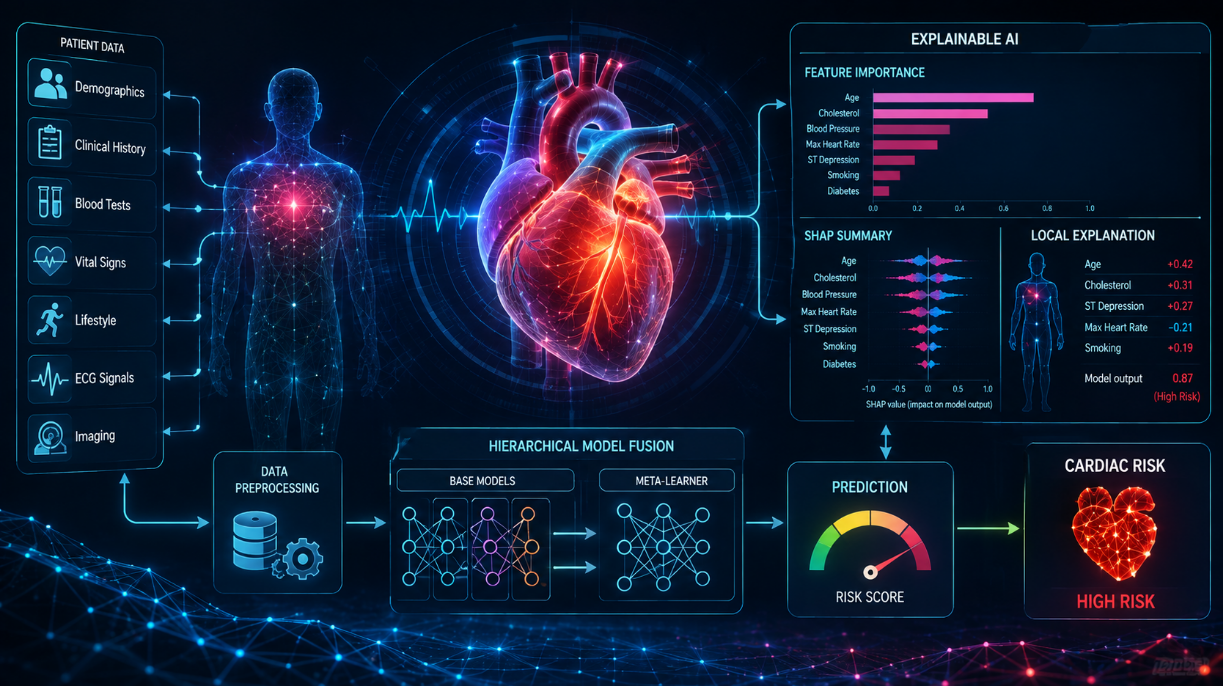
An epidemic survey of recent years has reached a conclusion that virtually 17.9 million lives are lo...

Despite the dynamic nature of the market, large dimensionalities of asset space and varieties of fin...

Although the performance of LLMs on a wide variety of natural language processing problems demonstra...